

Milton Junk Removal Services
Schedule now and watch your property transform with same-day pickup and stress-free hauling!
Get a Free QuoteExpert Junk Removal Solutions for Milton's, GA Diverse Property Needs
Tailored Junk Removal for Milton’s Homes and Businesses
Milton, GA’s unique blend of scenic neighborhoods and thriving commercial centers creates distinct junk removal challenges throughout the year. For homeowners, winter storms often leave behind debris and damaged outdoor items, while spring brings renovation projects in communities like White Columns, Crooked Creek, and The Manor, resulting in construction waste that needs prompt removal. Summer sees yard waste pile up near Bell Memorial Park and Birmingham Park, and fall demands thorough leaf and branch cleanup in tree-lined areas such as Crabapple and Providence. Year-round, residents near local waterways face basement flooding, and growing families or estate transitions generate ongoing disposal needs.
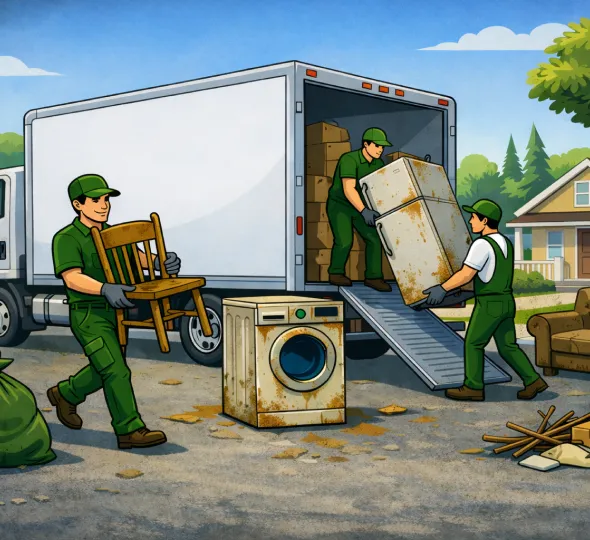
Our Milton Residential & Commercial Junk Removal Services
Milton Specialty & Other Junk Removal Services
Why Choose Milton Junk Removal Services
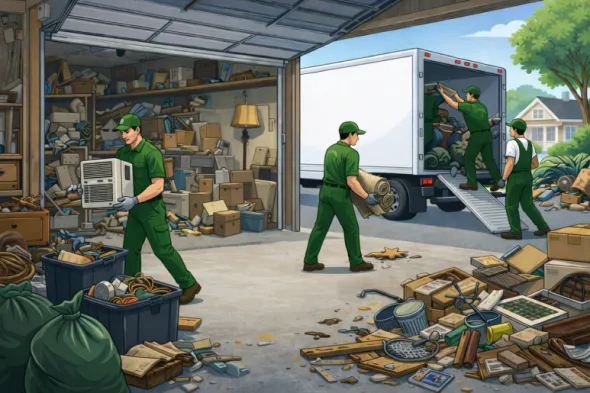

Comprehensive Junk Removal Solutions
-
Competitive Pricing
-
Experienced Professional Team
-
Fast and Reliable Service
-
Eco-Friendly Disposal
-
Flexible Scheduling
-
Satisfaction Guarantee
Understanding Milton's Waste Management Infrastructure & Municipal Disposal Requirements
Milton, Georgia operates within Fulton County's broader solid waste management framework. The City of Milton does not provide direct residential garbage collection; instead, residents contract with private haulers licensed to operate within city limits. Fulton County manages regional disposal infrastructure, including transfer stations and recycling drop-off centers. The City of Milton Public Works Department oversees street maintenance, stormwater management, and coordination with county-level waste programs. Residents seeking guidance on bulk waste disposal, yard debris removal, or special item collection should contact the department directly for current hauler listings and county facility information.
- Private haulers must hold a valid Fulton County business license and City of Milton occupation tax certificate
- Curbside recycling is provided through contracted private waste haulers
- Yard waste and brush must be bundled or containerized per hauler specifications
- Fulton County operates household hazardous waste collection events multiple times per year
Milton Public Works Department
2006 Heritage Walk, Milton, GA 30004
Phone: (678) 242-2500
Official Website: Milton Public Works Department
Milton Municipal Regulations & Permits for Junk Removal Services
Waste haulers and junk removal operators conducting business in Milton must comply with the city's occupation tax and business licensing requirements administered through the Milton Community Development department. Dumpster placement on public rights-of-way requires a right-of-way permit, and operators must coordinate with the city to avoid obstructing traffic flow or damaging roadway surfaces. Milton's zoning ordinances restrict outdoor storage of debris and waste containers in residential districts, and code enforcement officers actively monitor compliance. Construction and demolition projects generating significant debris volumes require building permits through the Milton Building Division before work commences.
- Occupation tax certificates must be renewed annually through the City of Milton Finance Department
- Right-of-way encroachment permits require a completed application and site plan submission
- Dumpsters placed on residential streets must display reflective markings and maintain clear sightlines
- Violations of waste storage ordinances carry fines starting at $1,000 per occurrence under Milton's municipal code
Milton Building Division
2006 Heritage Walk, Milton, GA 30004
Phone: (678) 242-2500
Official Website: Milton Building Division
Partnering with Milton's Environmental & Recycling Initiatives
Milton's Environmental Programs & Sustainability division promotes waste diversion, recycling education, and conservation efforts aligned with Georgia's statewide solid waste management goals. The Georgia Environmental Protection Division oversees solid waste permitting and landfill compliance across the state. Georgia does not currently mandate a statewide mattress recycling program, but residents can donate usable mattresses to organizations such as Habitat for Humanity ReStore locations in north Fulton County or schedule pickup through Salvation Army donation services. Scrap metal recycling facilities in the greater Alpharetta and Roswell area accept ferrous and non-ferrous metals from residential and commercial cleanout projects.
- Fulton County provides periodic paper shredding and electronics recycling events at rotating locations
- Goodwill of North Georgia accepts furniture, clothing, and household goods at multiple drop-off centers
- Georgia's solid waste management plan targets increased recycling rates and reduced per-capita landfill disposal
- Residents should separate recyclable metals, cardboard, and reusable items before scheduling junk removal
Electronics Disposal & E-Waste Recycling Laws in Georgia
Georgia does not currently operate a statewide Extended Producer Responsibility program for electronics, but the EPA Universal Waste Rule governs the handling of batteries, fluorescent lamps, and mercury-containing devices at the federal level. Fulton County periodically hosts e-waste collection events where Milton residents can drop off televisions, computer monitors, printers, and other covered electronic devices at no charge. Businesses in Milton must ensure data destruction on all electronic storage devices before disposal, as required under federal data protection guidelines. The EPA Region 4 Southeast office in Atlanta provides additional guidance on universal waste compliance for commercial generators.
- Televisions, monitors, and computer equipment should never enter the municipal solid waste stream
- Lithium-ion and lead-acid batteries require separate handling and recycling through certified facilities
- Fluorescent tubes and compact fluorescent lamps contain mercury and fall under universal waste regulations
- Businesses generating large volumes of e-waste must register as universal waste handlers with Georgia EPD
Appliance Removal & Refrigerant Recovery Requirements in Milton
Federal law under Clean Air Act Section 608 requires EPA-certified technicians to recover refrigerants from appliances before disposal or recycling. Refrigerators, freezers, window air conditioning units, and dehumidifiers all contain regulated refrigerants that must be captured using approved recovery equipment. Milton residents and businesses arranging appliance removal should verify that their junk removal provider employs or contracts with Section 608-certified technicians. Fulton County transfer stations accept white goods only after refrigerant recovery documentation is provided. Improper venting of refrigerants carries federal penalties of up to $44,539 per day per violation under current EPA enforcement guidelines.
- All appliances containing refrigerants require certified recovery before disposal or scrap processing
- Documentation of refrigerant recovery must be retained for a minimum of three years
- Scrap metal recyclers in the north Fulton County area accept de-gassed appliances for material recovery
- Water heaters, washers, dryers, and dishwashers do not contain refrigerants but require proper recycling
Seasonal Waste Patterns & Weather Considerations in Milton
Milton's humid subtropical climate produces distinct seasonal waste patterns that affect junk removal scheduling and logistics. Spring and early summer generate peak demand for yard debris removal, garage cleanouts, and pre-move decluttering as the real estate market accelerates. Georgia's intense summer heat—with temperatures regularly exceeding 90°F from June through September—requires careful timing for appliance removal to prevent refrigerant expansion risks and worker heat stress compliance under OSHA General Duty Clause requirements. Fall leaf season creates substantial yard waste volumes, and severe thunderstorms throughout the warm months can generate storm debris requiring rapid response.
- Spring cleaning season (March–May) produces the highest residential junk removal demand in Milton
- Summer heat advisories require adjusted work schedules and mandatory hydration breaks for removal crews
- Post-storm debris from fallen trees and branches may require coordination with Milton's tree conservation program
- Winter months offer reduced demand and faster scheduling for large-scale estate or renovation cleanouts
Milton Tree Conservation
2006 Heritage Walk, Milton, GA 30004
Phone: (678) 242-2500
Official Website: Milton Tree Conservation
Construction Debris Sorting & Material Separation Requirements in Milton
Renovation and demolition projects in Milton require building permits issued through the Milton Building Division before work begins. The federal Lead Renovation, Repair & Painting Rule applies to all pre-1978 structures, requiring EPA-certified renovators to follow lead-safe work practices when disturbing painted surfaces. Construction and demolition debris must be separated into clean wood, concrete and masonry, metals, and mixed waste categories for proper disposal at licensed C&D landfills in the greater metro Atlanta area. Georgia EPD requires C&D landfills to maintain separate permits from municipal solid waste facilities, and tipping fees vary by material type and facility.
- Clean concrete and asphalt are accepted at aggregate recycling facilities for crushing and reuse
- Treated lumber, painted wood, and composite materials require disposal at permitted C&D landfills
- Metal framing, copper wiring, and plumbing fixtures should be separated for scrap metal recycling
- Drywall and gypsum board may be accepted at specialized recycling facilities in the metro Atlanta region
What Neighborhoods Do We Serve Throughout Milton, GA?
Crabapple: Milton's historic crossroads village featuring a mix of small commercial properties and older residences along Mid Broadwell Road; coordination with the city's historic preservation guidelines is often necessary for exterior demolition debris removal.
The Manor Golf & Country Club: Gated estate community with large-lot properties and long driveways; ideal for whole-home cleanouts, furniture removal, and large appliance disposal projects.
White Columns: Established subdivision off Freemanville Road with spacious single-family homes; frequent demand for garage, basement, and attic cleanout services during seasonal transitions.
Crooked Creek: Family-oriented neighborhood near Birmingham Highway with wide residential streets; well-suited for driveway-loaded dumpster placement and bulk item removal.
Birmingham Crossroads: Rural-character area along Birmingham Highway with larger acreage properties; brush clearing, barn cleanouts, and agricultural debris removal are common service needs.
Deerfield: Mature subdivision with wooded lots and established landscaping near Bethany Bend; tree debris and yard waste removal complement household junk removal projects.
How Georgia Statewide Waste Reduction Goals Impact Milton Services
Georgia's Solid Waste Management Act requires each county to maintain a comprehensive solid waste management plan updated on a ten-year cycle. Fulton County's plan establishes waste reduction targets and recycling infrastructure goals that directly affect Milton's disposal options and hauler requirements. The Georgia Environmental Protection Division administers solid waste facility permits, enforces landfill operating standards, and maintains a directory of permitted disposal sites across the state. The Resource Conservation and Recovery Act (RCRA) provides the federal framework governing how solid and hazardous waste moves through Georgia's disposal infrastructure from collection through final disposition.
- Fulton County's solid waste plan identifies waste reduction, recycling, and collection service goals for all municipalities
- Georgia EPD maintains a searchable database of permitted solid waste handling facilities statewide
- Regional landfills serving north Fulton County include facilities in Cherokee and Forsyth counties
- Interstate transport of solid waste is regulated under both RCRA and Georgia's environmental statutes
Georgia Environmental Protection Division
2 Martin Luther King Jr. Drive SE, Suite 1462, Atlanta, GA 30334
Phone: (404) 656-4713
Official Website: Georgia Environmental Protection Division
Milton Stormwater Compliance & Debris Disposal Near Waterways
Milton's extensive network of creeks, streams, and floodplains requires careful attention during junk removal and debris disposal operations. The Milton Stormwater Management program enforces erosion and sediment control regulations that apply to any land-disturbing activity, including large-scale cleanout projects on properties adjacent to waterways. Debris, construction materials, and waste containers must not be staged within stream buffers or floodplain areas designated on Milton's zoning maps. Properties located within the Big Creek, Chicken Creek, or Little River watersheds face additional restrictions on ground disturbance and material storage during removal operations.
- Stream buffer zones in Milton extend 50 feet from the banks of all perennial and intermittent streams
- Erosion and sediment control measures are required for land disturbance exceeding specified thresholds
- Waste containers and debris piles must be positioned outside designated floodplain boundaries
- The Milton Planning Commission reviews development and land disturbance applications affecting sensitive areas
Milton Stormwater Management
2006 Heritage Walk, Milton, GA 30004
Phone: (678) 242-2500
Official Website: Milton Stormwater Management